


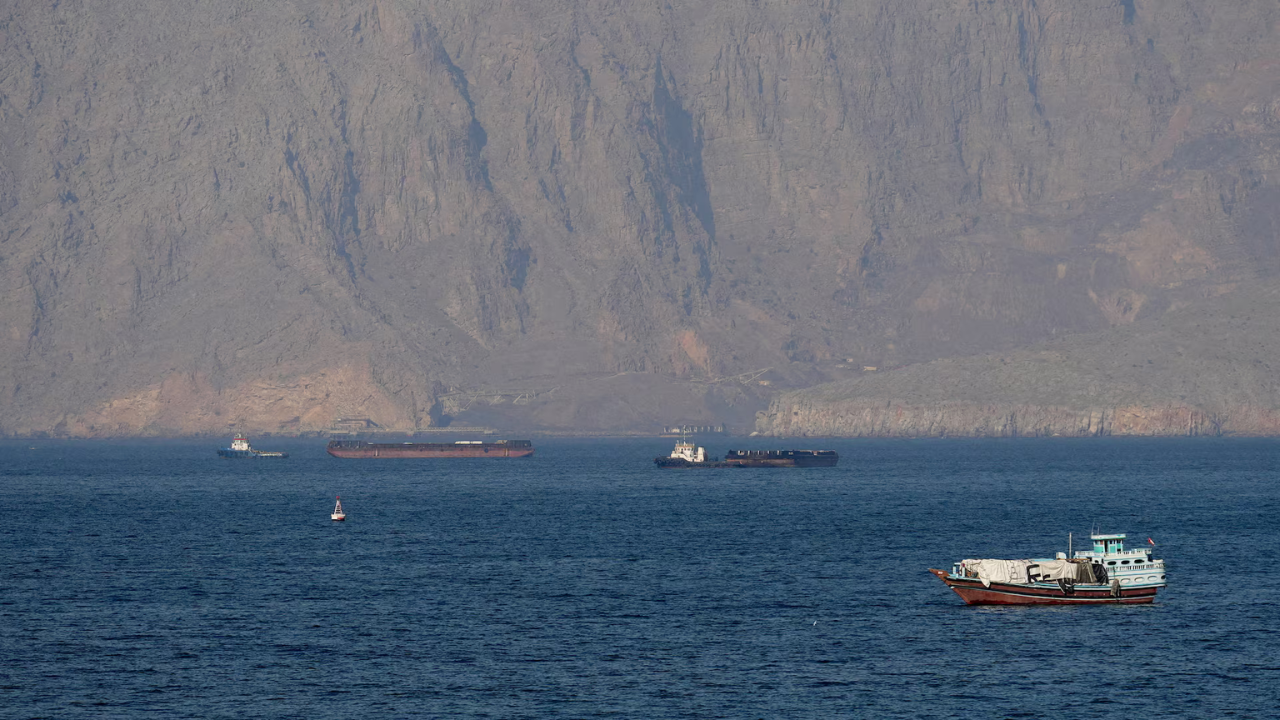
The United States has insisted that the Strait of Hormuz remains open to international shipping after Iran announced it had closed the strategic waterway following a fresh round of military confrontation between the two countries.
The renewed fighting marks one of the most serious escalations since an interim ceasefire was reached last month. While Washington says commercial vessels can continue using the route under US military protection, Tehran argues the passage has been shut until further notice as it seeks greater control over maritime traffic in the Gulf.
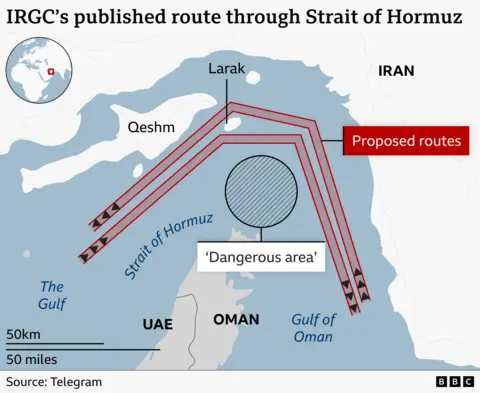
Photo Credit: BBC
Fresh US strikes target Iranian military infrastructure
US Central Command said it launched a new series of attacks on Sunday, targeting more than 140 Iranian military sites. According to the US military, the strikes focused on missile launch positions, drone facilities, coastal surveillance systems and communications infrastructure that it says were being used to threaten commercial shipping.
American officials described the operation as an effort to reduce Iran’s ability to attack civilian vessels transiting the Strait of Hormuz. Defense Secretary Pete Hegseth said Iran had made “a poor choice” and would face the consequences of its actions.
Iran acknowledged strikes on several coastal military locations and telecommunications facilities but maintained that it would continue responding to what it describes as US aggression.
Iran broadens retaliation across the region
Tehran answered with a wider regional military response, with the Islamic Revolutionary Guard Corps announcing attacks on US military positions and allied countries across the Middle East.
Iran said it struck Prince Hassan Air Base in Jordan and claimed damage to command facilities and drone infrastructure. Authorities in the United Arab Emirates, Qatar, Kuwait, Oman and Bahrain also reported intercepting missiles and drones launched from Iran, highlighting the expanding geographic scope of the conflict.
The US military has not publicly confirmed Iran’s claims regarding damage to its installation in Jordan.
Shipping incident intensifies tensions
The latest escalation followed an attack on a commercial vessel navigating the Strait of Hormuz.
US Central Command accused Iran’s Revolutionary Guard of attacking a Cyprus-flagged cargo ship after Iranian authorities claimed it was using an unauthorized shipping route. The vessel reportedly suffered engine room damage, leaving it unable to continue its voyage, while one crew member was reported missing.
The UK’s Maritime Trade Operations agency said the crew abandoned the ship and evacuated into lifeboats after the attack. Iran has continued promoting its own preferred navigation corridor through the waterway, insisting vessels should follow routes approved by its authorities.
Ceasefire efforts under growing strain
The latest exchange of strikes has placed renewed pressure on the fragile ceasefire framework agreed last month, which had been intended to gradually restore safe commercial shipping through the Strait of Hormuz and create space for broader diplomatic negotiations.
US President Donald Trump has argued that Iran’s recent attacks effectively ended the agreement, while Iranian Foreign Minister Abbas Araghchi has accused Washington of violating its commitments first.
Despite the renewed violence, US officials have indicated that diplomatic contacts have not been abandoned and that mediators are still attempting to revive negotiations. Reports in US media have also suggested Iranian officials privately told American counterparts that recent attacks on tankers were not authorized by senior leadership and were carried out by a rogue internal faction, although neither government has publicly confirmed those reports.
Why the Strait of Hormuz matters
The Strait of Hormuz is one of the world’s most strategically important maritime chokepoints, serving as the primary export route for a significant share of globally traded crude oil and liquefied natural gas.
Any disruption to shipping through the narrow waterway has immediate implications for international energy markets, insurance costs and global supply chains. Shipping activity has already fallen sharply in recent days as operators reassess security risks, while oil prices have climbed amid fears that the conflict could further disrupt energy exports from the Gulf.
Uncertainty remains despite US assurances
Although US officials continue to state that commercial navigation through the Strait of Hormuz remains possible, Iran’s insistence that it controls access to the waterway leaves the situation highly uncertain.
With military operations continuing, shipping companies, regional governments and global markets are closely watching whether diplomatic efforts can prevent the confrontation from escalating further and restore confidence in one of the world’s most critical trade routes.