

The United States and Iran exchanged another wave of military attacks on Sunday and Monday, deepening an already volatile confrontation centered on the Strait of Hormuz, one of the world’s most important shipping routes. The escalation comes only weeks after both countries reached a preliminary agreement intended to reduce hostilities and restore commercial navigation through the strategic waterway.
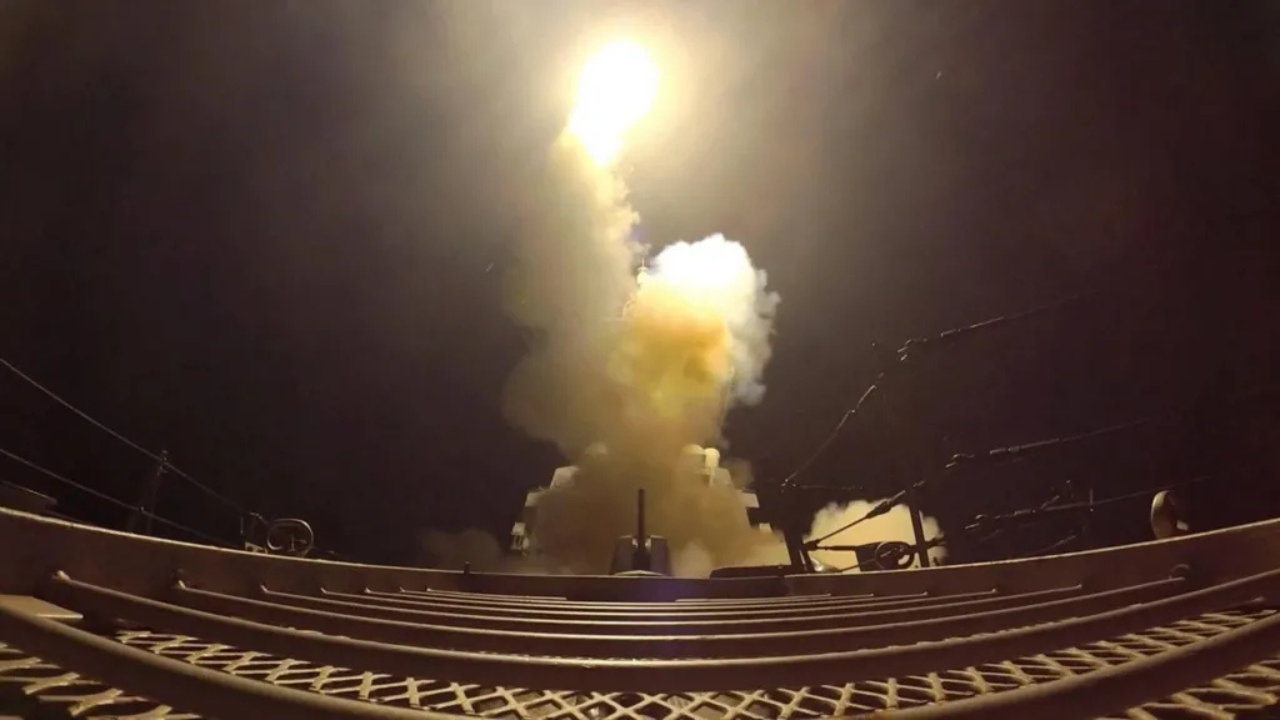
According to the US military, American forces launched strikes against dozens of Iranian military targets, including air-defense systems, coastal radar installations, missile launch sites and drone capabilities. US Central Command said the operation was designed to weaken Iran’s ability to threaten commercial shipping and ensure freedom of navigation in the Gulf.
Photo Credit: US Central Command/Handout via REUTERS
Iranian state media reported fatalities from the attacks, saying strikes hit several locations along the country’s southern coast, including Bandar Abbas, Qeshm Island and other areas near the Strait of Hormuz. Iranian officials also reported casualties in Khuzestan and Hormozgan provinces.
Iran responds with attacks on US-linked military facilities
Iran’s Islamic Revolutionary Guard Corps (IRGC) announced retaliatory strikes targeting American military assets across the Middle East. Iranian officials said operations focused on facilities in Kuwait, Jordan, Bahrain and Oman.
Authorities in several of those countries reported intercepting missiles or drones before they reached their intended targets. Jordan’s military said projectiles entering its airspace were destroyed without causing casualties, while Bahrain and Kuwait also confirmed successful air-defense operations against incoming threats.
The latest exchanges broaden concerns that the conflict could draw more regional states into the crisis, even as many Gulf governments continue urging restraint.
Strait of Hormuz becomes the center of the dispute
At the heart of the confrontation is the Strait of Hormuz, a narrow waterway that carries roughly one-fifth of the world’s oil and liquefied natural gas shipments. Any disruption there has immediate consequences for international energy markets and global trade.
Iran recently declared the strait closed, while the United States has rejected that claim, insisting commercial traffic remains free to navigate. Tehran has accused Washington of interfering in the management of the waterway and undermining efforts to establish a joint navigation mechanism with neighboring Oman.
Iranian officials also reported that Revolutionary Guard naval forces fired warning shots at vessels they alleged were attempting to pass through what Tehran described as unauthorized routes.
Trump announces new blockade measures
Following the overnight fighting, President Donald Trump announced that the United States would reinstate its naval blockade targeting Iranian shipping. He also declared that the US would assume responsibility for protecting navigation through the Strait of Hormuz while introducing a proposed 20% charge on cargo moving through the passage to cover security costs.
Trump argued that maintaining safe passage through the strategic corridor required sustained American military involvement. His remarks signaled a significant expansion of Washington’s posture in the Gulf and immediately drew criticism from Tehran.
Iran’s Revolutionary Guard responded by accusing the United States of placing global oil and gas supplies at greater risk through its military intervention. Iranian officials reiterated that Tehran would continue to exercise what it described as its sovereignty over the strait.
Peace agreement faces growing uncertainty
The renewed fighting has cast serious doubt over the preliminary agreement reached between Washington and Tehran in June. That understanding was intended to halt months of hostilities and restore stable commercial shipping through the Strait of Hormuz.
Iran’s Foreign Ministry accused the United States of undermining diplomatic efforts by carrying out fresh military operations, arguing that the strikes were making de-escalation increasingly difficult. Iranian officials also said discussions with Oman over a mechanism to manage maritime traffic had become more complicated amid growing US involvement.
Oil markets react to renewed instability
Financial markets responded quickly to the latest escalation. Brent crude oil rose more than 3%, reflecting renewed concerns that prolonged instability in the Gulf could disrupt one of the world’s most important energy corridors. Analysts continue to monitor shipping activity closely as traders assess the likelihood of further military action and its potential impact on global supply chains.
Despite continued diplomatic contacts, the latest exchange of strikes highlights how fragile the current situation has become. With both Washington and Tehran maintaining sharply different positions on control and security in the Strait of Hormuz, prospects for restoring the earlier agreement appear increasingly uncertain.
For now, commercial shipping continues under heightened military surveillance, while governments and energy markets remain focused on whether further escalation can be avoided or whether the dispute over one of the world’s most strategic waterways will deepen in the days ahead.