


A patch of disputed land along the Danube River has become the center of an ambitious political experiment that blends cryptocurrency, blockchain technology and libertarian ideals. Known as Liberland, the self-declared micronation has attracted financial backing from prominent figures in the digital asset industry who believe technology can reshape the way governments operate.
Although Liberland remains unrecognized by any sovereign nation, its founders and supporters see it as more than a symbolic project. They describe it as a prototype for a future in which public administration, elections and financial systems are managed through blockchain rather than traditional state institutions.

A Digital Nation Built on Blockchain
Liberland was founded in 2015 by Czech libertarian politician Vít Jedlička on a disputed stretch of land between Croatia and Serbia. While the territory itself consists largely of floodplain, the project’s ambitions extend far beyond its physical borders.
Its leadership has developed blockchain-based systems intended to manage citizenship, voting and governance. Supporters argue that transparent digital records could reduce bureaucracy and increase accountability, while minimizing government intervention in economic life.
The project has also invested in virtual plans for a future city, reflecting its long-term vision despite the practical challenges of establishing permanent infrastructure on the site.
Wealth and Political Influence Intersect
One of Liberland’s most controversial features is its governance model. Instead of following the traditional principle of one person, one vote, political influence is tied to blockchain-based governance tokens known as Liberland Merits.
Under the system, individuals holding larger amounts of these digital assets receive greater voting power in leadership decisions and governance matters. Supporters argue the model rewards those most invested in the community, while critics contend it effectively allows wealth to translate directly into political influence.
That structure has fueled wider debate over whether blockchain governance represents genuine democratic innovation or simply a new form of plutocracy enabled by digital assets.
Justin Sun Emerges as a Key Figure
Among Liberland’s highest-profile supporters is crypto entrepreneur Justin Sun, founder of the TRON blockchain. Sun has played a prominent role in the micronation’s leadership and has become one of its most influential backers.
Sun has built one of the cryptocurrency industry’s largest fortunes and has frequently attracted international attention through headline-grabbing investments and business ventures. His involvement has also drawn regulatory scrutiny over the years, although he has denied wrongdoing in relation to previous allegations and has reached legal settlements in some cases.
Supporters view Sun as someone helping finance experimental governance systems that could one day operate beyond conventional national borders.
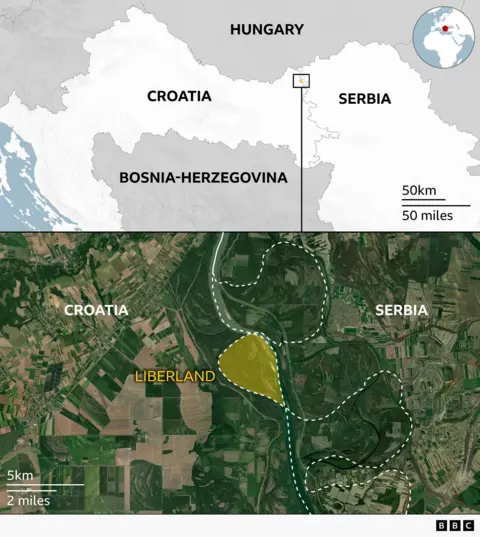
Photo Credit: BBC
A Broader Movement Beyond Liberland
Liberland is only one example of a growing movement among some technology entrepreneurs who advocate decentralized governance. Similar projects—including digital nations, blockchain communities and privately governed territories—share the belief that technology can replace many traditional government functions.
These initiatives often promote low taxation, limited regulation and blockchain-based decision-making. Advocates argue such systems could offer greater efficiency and individual freedom, while critics question how they would protect equal political rights, public services and democratic accountability.
The debate has gained greater visibility as cryptocurrency has become increasingly influential in politics and public policy discussions.
Why the Project Is Drawing Attention
Liberland’s significance extends beyond its tiny territory because it reflects broader questions about how emerging technologies could influence political systems.
Blockchain already underpins digital currencies worth billions of dollars worldwide. Its supporters increasingly argue that the same technology could eventually support elections, public records, taxation and government administration. Critics, however, caution that replacing public institutions with technology controlled or heavily influenced by wealthy private interests could create new forms of concentrated power.
The discussion has become especially relevant as cryptocurrency companies and investors continue expanding their presence in political lobbying and policy debates in several countries.
For now, Liberland remains an unrecognized micronation with limited practical authority over the territory it claims. Yet its supporters continue developing blockchain governance systems while promoting the project as a model for future societies.
Whether Liberland ultimately becomes a functioning state or remains an experimental political concept, its rise illustrates how cryptocurrency’s influence is extending beyond finance into discussions about governance, citizenship and democracy itself. As blockchain technology evolves and digital assets become more embedded in global politics, debates over who should hold power—and how that power is exercised—are likely to grow rather than fade.