


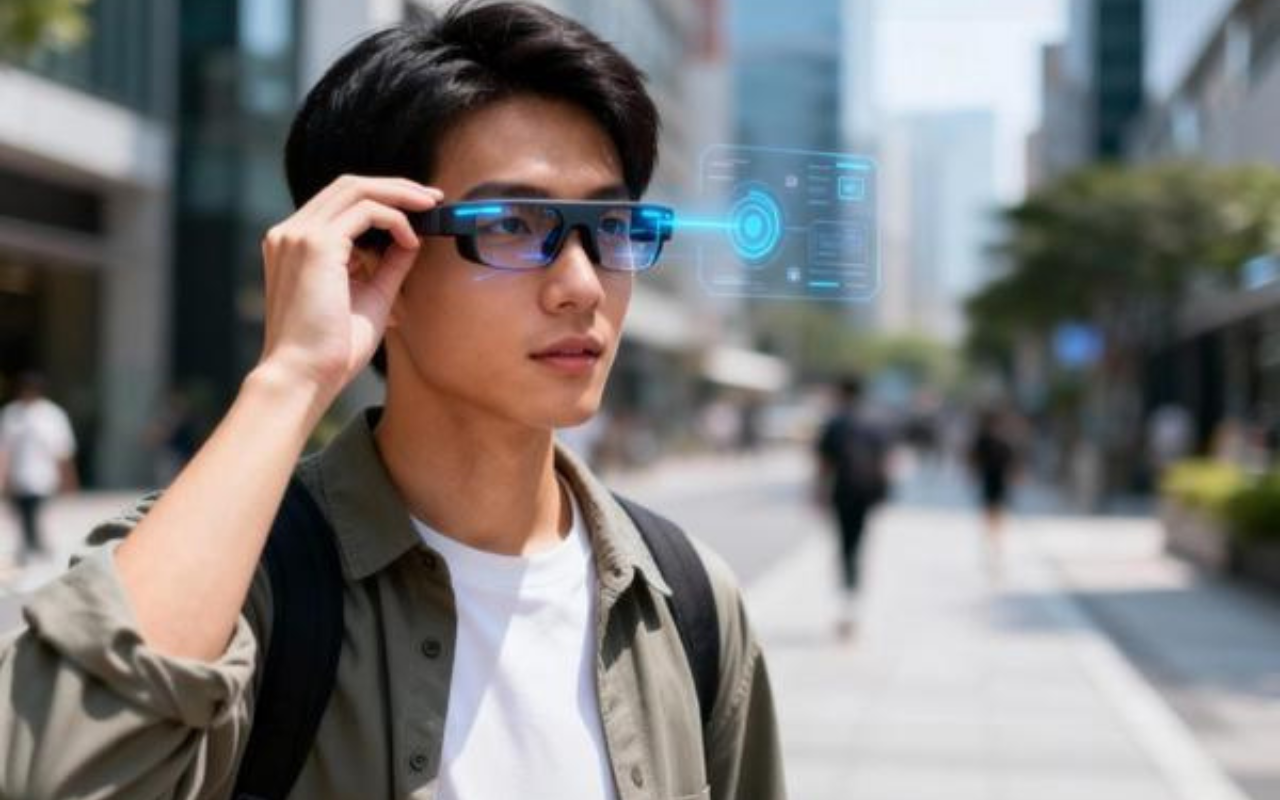
A New Vision for Personal Technology
For decades, the smartphone screen has been the center of digital life. From messaging and navigation to entertainment and shopping, nearly every online activity begins with a glance at a display.
That model could soon begin to change.
Several of the world’s biggest technology companies are investing heavily in devices that aim to move computing beyond traditional screens. Smart glasses, AI-powered earbuds and wearable assistants are emerging as the next stage of personal technology, offering users ways to access information without constantly looking at a phone.

AI Is Making Screen-Free Devices More Practical
Artificial intelligence is at the heart of this shift.
Rather than requiring users to tap through apps, next-generation devices are being designed to understand spoken requests, recognize surroundings and deliver information at the right moment. Improvements in voice recognition and computer vision have made it increasingly feasible for wearable devices to interpret what users are seeing and hearing.
Reports suggest Apple is exploring AirPods equipped with cameras that would help Siri understand the user’s environment, expanding the assistant’s ability to respond to real-world situations. While Apple has not confirmed the project, the reported plans fit a wider industry trend toward context-aware AI experiences.
Smart Glasses Return to the Spotlight
Smart glasses have long been viewed as a possible successor—or at least a companion—to smartphones.
Earlier attempts, including Google Glass, struggled to gain mainstream acceptance because of high prices, limited capabilities and widespread privacy concerns. Since then, advances in hardware, battery efficiency and artificial intelligence have renewed interest in wearable computing.
Today’s devices are being designed to blend more naturally into everyday life while providing features such as navigation, translation, messaging and AI assistance without requiring users to pull out a phone.
The Promise of Less Screen Time
Supporters argue that wearable AI could make technology feel less intrusive.
Instead of repeatedly checking notifications or opening multiple apps, users could receive only the information they need through voice responses, audio prompts or lightweight visual displays. That approach aligns with growing concerns about excessive screen time and digital distraction.
Technology companies increasingly describe this concept as “ambient computing,” where digital assistance fades into the background instead of demanding constant attention.
Challenges Remain
Despite the industry’s ambitions, convincing consumers to spend less time looking at screens may prove difficult.
Smartphones remain the primary way people consume videos, browse social media, play games and communicate. Many users also prefer visual interfaces for reading, shopping and creative work, making a complete shift away from screens unlikely in the near future.
Privacy is another major consideration. Devices equipped with cameras, microphones and always-on AI assistants raise questions about data collection, surveillance and how information gathered from users’ surroundings will be handled.
What Comes Next?
The technology industry’s growing investment in wearable AI suggests companies see the next phase of computing extending beyond the smartphone rather than replacing it overnight.
Whether consumers embrace smart glasses, AI-enabled earbuds and other screen-light devices will likely depend on how useful they prove in everyday life, as well as how companies address concerns around privacy, comfort and trust.
For now, the smartphone remains central to modern computing. But as artificial intelligence becomes more capable and wearable technology continues to evolve, the screen may gradually become just one of several ways people interact with the digital world.