

For the first time, scientists have obtained close-up views of Kamoʻoalewa, a small asteroid that shares Earth’s orbit around the Sun and is widely known as one of the planet’s quasi-satellites. The images were captured by China’s Tianwen-2 spacecraft after a journey of more than 400 days through deep space, marking a major achievement for the country’s first asteroid sample-return mission.
Although Kamoʻoalewa is often referred to as Earth’s “second moon,” astronomers emphasize that it is not a true natural satellite. Instead, it follows its own orbit around the Sun while remaining gravitationally linked to Earth in a stable orbital relationship that causes it to stay relatively close over long periods. This unusual behavior places it among a small group of known Earth quasi-satellites.
 Photo Credit: axivan.com – stock.adobe.com
Tianwen-2 Begins Close Scientific Investigation
The spacecraft approached the asteroid after traveling roughly one billion kilometers (about 621 million miles), eventually moving close enough to record detailed images of the object. The photographs reveal an irregular, rocky body measuring an estimated 42 to 100 meters (138 to 328 feet) across.
The successful imaging campaign represents the start of a longer scientific investigation. Mission teams plan to study the asteroid’s surface, composition, structure and rotation before attempting one of the mission’s most challenging objectives—collecting samples for return to Earth.
A Difficult Target for Space Exploration
Despite its modest size, Kamoʻoalewa presents several technical challenges. Scientists say the asteroid spins rapidly, completing one rotation roughly every 28 minutes. Its uneven shape, weak gravity and rugged terrain leave few suitable locations for a spacecraft to make stable contact.
To overcome those obstacles, Tianwen-2 has been equipped with precision hovering and anchoring technologies designed to help the spacecraft safely approach the asteroid and secure samples without bouncing away or losing collected material.
Why Scientists Are Interested in Kamoʻoalewa
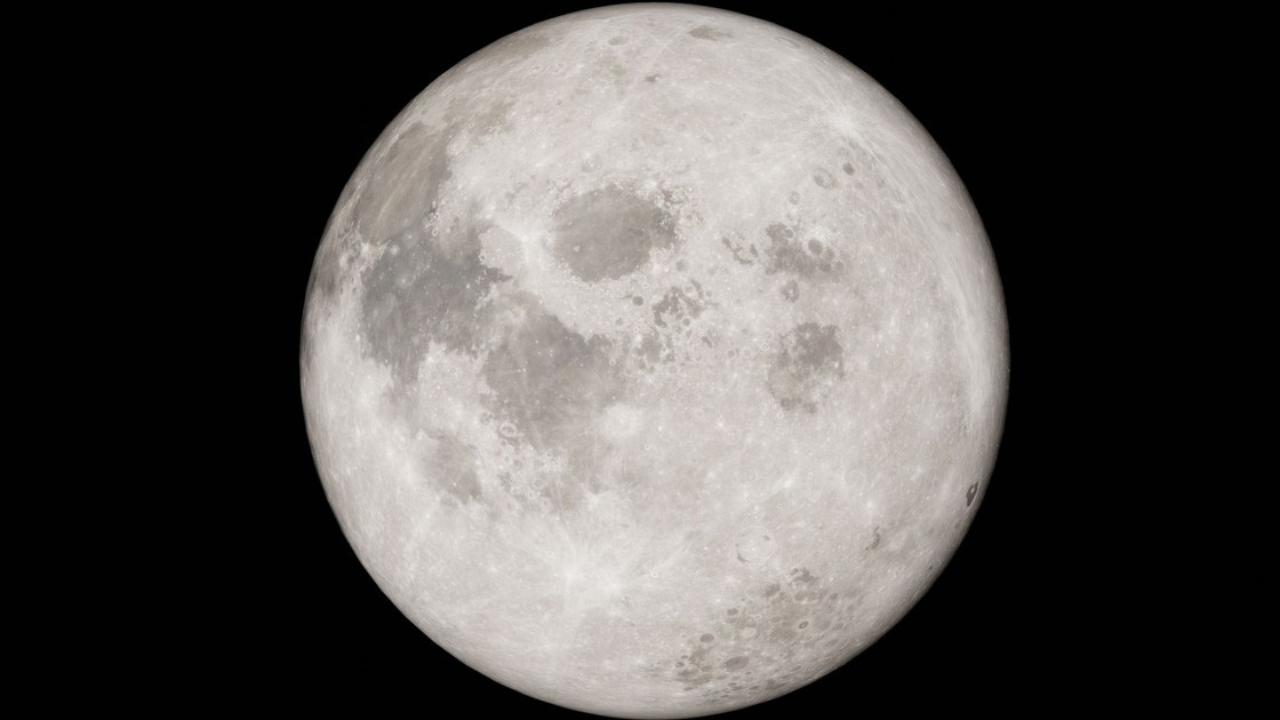
Researchers consider Kamoʻoalewa one of the most intriguing near-Earth objects because of its unusual orbit and possible origin. Previous observations have suggested it could be a fragment of the Moon that was blasted into space by an ancient impact, though that hypothesis has yet to be confirmed.
By examining material collected directly from the asteroid, scientists hope to determine its mineral composition, understand how its orbit evolved and investigate whether it contains evidence of water or other clues about its history. The findings could also improve understanding of how Earth’s quasi-satellites formed and how similar objects evolve over time.
 Photo Credit: NASA/JPL Caltech
A Milestone for China’s Deep-Space Program
The close-up images mark an important stage in the Tianwen-2 mission, which is expected to continue detailed observations before attempting its sample collection. If successful, the returned material will allow researchers to conduct laboratory analyses that cannot be performed by instruments aboard a spacecraft.
 Photo Credit: CSNA
Beyond its scientific goals, the mission demonstrates China’s expanding capabilities in deep-space exploration. The data gathered from Kamoʻoalewa could help answer longstanding questions about near-Earth asteroids, the history of the Moon and the evolution of objects that travel alongside our planet through the Solar System.