



Christopher Nolan’s latest feature, The Odyssey, is already generating significant awards-season buzz after receiving an enthusiastic response from critics ahead of its theatrical debut. The film marks the Academy Award-winning director’s first project since Oppenheimer, which dominated the 2024 Oscars, and sees him tackle one of the most influential works of classical literature.
Adapted from Homer’s ancient Greek epic, the film stars Matt Damon as Odysseus, the legendary king of Ithaca, whose long and dangerous journey home after the Trojan War forms the heart of the story. Anne Hathaway plays Penelope, while Tom Holland portrays their son Telemachus. The ensemble also includes Zendaya, Robert Pattinson, Charlize Theron and Lupita Nyong’o.
 Photo Credit: Getty Images
Critics Hail the Film’s Scale and Craftsmanship
Early reviews have been overwhelmingly positive, with several major publications describing the film as one of Christopher Nolan’s finest achievements. Critics have highlighted its breathtaking visuals, ambitious storytelling and technical innovation, with many pointing to its immersive IMAX presentation as a defining part of the experience.
Reviewers have praised Nolan’s ability to transform an ancient literary classic into a modern cinematic spectacle while maintaining the emotional weight of Odysseus’ struggle to return home. The performances, particularly Matt Damon’s portrayal of the battle-weary hero, have also attracted widespread acclaim.
A Story Rooted in Myth and Human Resilience
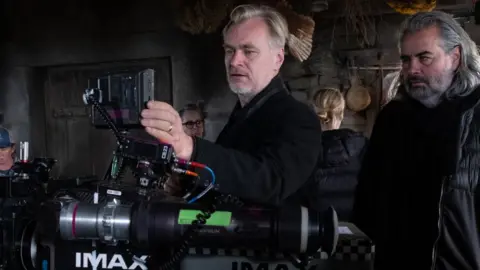 Photo Credit:Universal Studios
The film follows Odysseus as he faces mythical creatures, hostile gods and countless dangers during his years-long voyage back to Ithaca after the fall of Troy. While the adventure features iconic episodes from Greek mythology, the story also explores themes of family, sacrifice, survival and the lasting consequences of war.
Nolan’s interpretation reportedly places additional emphasis on the psychological burden carried by its central character, presenting the legendary voyage as both a physical and emotional journey.
Pushing the Boundaries of Filmmaking
 Photo Credit: Universal Studios
Beyond its story, The Odyssey has attracted attention for its technical achievements. The production was filmed entirely using IMAX film cameras, making it the first major feature to adopt the format throughout its entire runtime. The approach reflects Nolan’s continued commitment to large-format filmmaking following the success of previous releases including Dunkirk, Tenet and Oppenheimer.
The ambitious production was filmed across several international locations, bringing Homer’s legendary world to life with expansive practical photography and large-scale set pieces.
Not Every Review Is Unanimous
Although the critical response has been overwhelmingly positive, a small number of reviewers have argued that the film’s enormous visual ambition occasionally comes at the expense of emotional intimacy. Others described it as uneven compared with some of Nolan’s previous work, though even many of those reviews acknowledged its technical achievements and cinematic scope.
Why the Film Matters
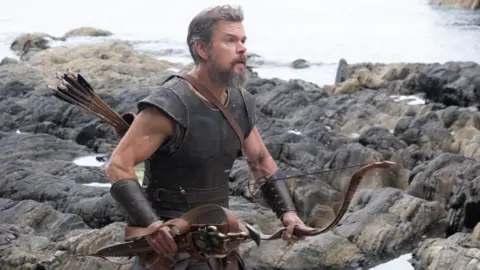 Photo Credit: Universal Studios
The enthusiastic reception reinforces Christopher Nolan’s reputation as one of modern cinema’s most influential filmmakers. Expectations surrounding The Odyssey have been exceptionally high, not only because it follows the Oscar-winning Oppenheimer, but also because of its adaptation of one of history’s most enduring literary works.
With advance praise building and anticipation already strong among audiences, the film is expected to become one of the year’s biggest theatrical releases when it arrives in cinemas on July 17. Whether it ultimately matches the awards success of Nolan’s previous film remains to be seen, but early reactions suggest The Odyssey has already established itself as one of the defining movie events of 2026.