

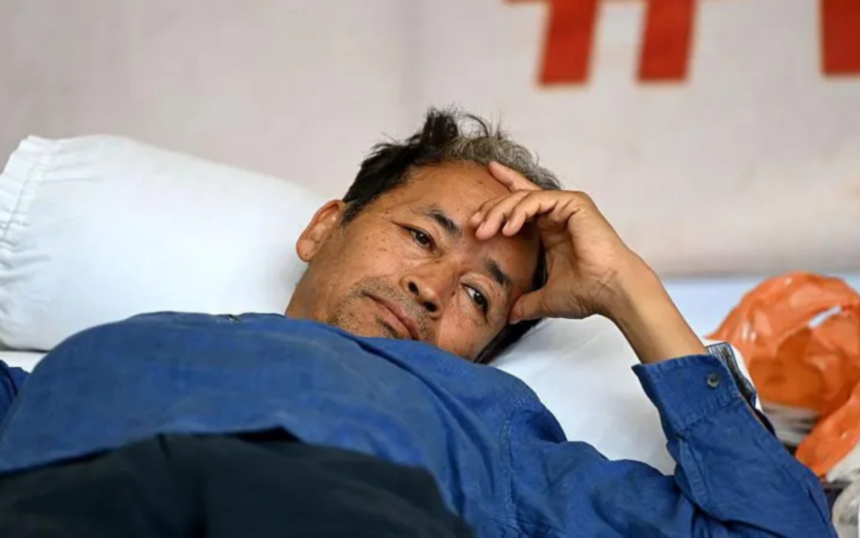
Fears are mounting over the health of Indian educationist and activist Sonam Wangchuk after he lost more than 9 kilograms during a 19-day hunger strike in New Delhi.
The 59-year-old has been consuming only salt water since beginning his indefinite fast in support of a campaign calling for reforms to India’s education system. According to members of his team, Wangchuk has lost 9.1kg and is now experiencing severe physical weakness, leaving him unable to stand without assistance.
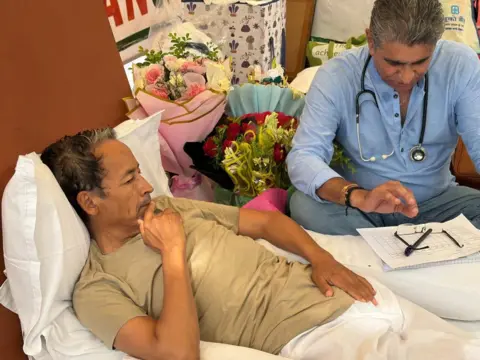 Photo Credit: Geeta Pandey/BBC
Delhi High Court Orders Health Monitoring
The growing concern has reached India’s judiciary. On Thursday, the Delhi High Court directed government authorities to regularly assess Wangchuk’s health and ensure that medical care is provided if his condition worsens.
The court’s intervention came after a petition sought urgent action to safeguard the activist’s health during the ongoing protest. Judges stressed the importance of protecting life while allowing medical decisions to be guided by professional advice rather than automatic intervention.
Protest Focuses on Education Reform
Wangchuk’s hunger strike is being held in solidarity with the online satirical movement known as the Cockroach Janta Party (CJP). The group has demanded sweeping reforms to India’s examination system following allegations of irregularities surrounding the 2026 NEET-UG medical entrance examination.
Among its principal demands is the resignation of Union Education Minister Dharmendra Pradhan, with campaigners arguing that stronger safeguards are needed to restore confidence in national competitive examinations.
Support Builds Across Public Life
As Wangchuk’s health has declined, appeals for him to end the fast have become more frequent. Political leaders and public figures have urged the government to engage in dialogue while also encouraging the activist to prioritize his well-being.
Actor Atul Kulkarni announced a symbolic one-day hunger strike in support of Wangchuk, describing it as a gesture of solidarity and calling for constructive discussions between the government and protesters. Jammu and Kashmir Chief Minister Omar Abdullah has also appealed to authorities to respond with compassion as concerns over Wangchuk’s condition continue to grow.
Why the Case Matters
The protest has become a focal point in a wider debate over the integrity of India’s competitive examination system. Alleged paper leaks and examination irregularities have triggered widespread frustration among students and families, placing renewed pressure on policymakers to strengthen oversight and rebuild public trust.
Wangchuk, widely known for his work in education and sustainable development, has become one of the most prominent voices backing the campaign, drawing national attention to the issue through his hunger strike.
What Happens Next
Medical concerns are expected to remain at the center of the case as authorities carry out the court’s directive for regular health monitoring. Meanwhile, organizers of the protest have planned further demonstrations to press for education reforms and accountability.
Whether the government chooses to open formal talks with campaigners could shape the next phase of a protest that has evolved from an online movement into a national issue, with Wangchuk’s health now becoming an equally urgent concern.