


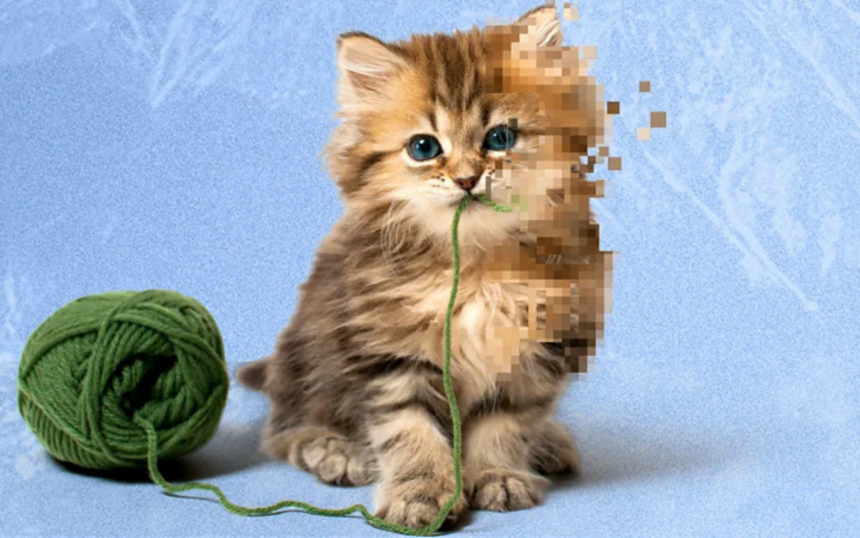
For years, funny cats, playful dogs and remarkable wildlife encounters have offered a welcome escape from the constant flow of news, arguments and viral outrage online. Animal videos became a universal language of the internet, drawing millions of viewers with moments that felt spontaneous, genuine and unscripted.
That sense of authenticity is now becoming harder to find.
Advances in generative artificial intelligence have made it possible to create convincing videos of animals doing things they never actually did. From unlikely friendships between predators and prey to dramatic rescue scenes and impossibly affectionate encounters with humans, fabricated clips are spreading rapidly across social media, often attracting millions of views before viewers realise they are entirely fictional.
When Entertainment Becomes Difficult to Trust
The technology behind AI-generated video has improved at remarkable speed. Scenes that once contained obvious visual flaws can now appear realistic enough to fool casual viewers, especially when watched on short-form platforms where content is consumed quickly.
As a result, many internet users describe a shift in how they react to viral animal videos. Instead of immediately enjoying the moment, they pause to ask whether the footage is genuine or digitally created. That growing uncertainty affects even authentic wildlife recordings, making real moments compete with fabricated ones for credibility.
Online discussions reflect that frustration, with many users saying AI-generated animal content is increasingly dominating search results and social media feeds, making authentic footage more difficult to find.
Researchers Warn of Wider Consequences
Scientists say the issue extends beyond harmless entertainment.
Researchers have warned that fabricated wildlife videos can distort public understanding of animal behaviour by portraying unrealistic interactions between species or suggesting that dangerous wild animals behave like domesticated pets. Such portrayals may leave viewers—particularly younger audiences—with inaccurate impressions of how wildlife behaves in nature.
Some examples highlighted by researchers include AI-generated clips showing predators behaving gently toward prey or wild animals displaying exaggerated human emotions. While designed to be engaging, these scenarios bear little resemblance to real ecosystems.
Conservation Could Also Be Affected
Experts also believe synthetic wildlife content may have unintended consequences for conservation.
If viewers repeatedly encounter fabricated videos featuring endangered animals in unrealistic situations, they may develop a false sense of how common those species are or misunderstand the threats they face. Researchers have also warned that misleading content could encourage risky interactions with wild animals or fuel demand for exotic pets by making them appear unusually friendly.
The concern is not that artificial intelligence has no role in conservation. AI is already helping researchers analyse wildlife data, identify species and process enormous collections of camera-trap images. The challenge lies in separating legitimate scientific applications from entertainment content presented without sufficient context.
Platforms Face Pressure to Improve Transparency
As generative AI becomes more accessible, calls are growing for clearer labelling of synthetic media.
Researchers argue that better disclosure could help viewers distinguish real wildlife footage from AI-generated creations, while stronger digital literacy would make it easier for audiences to question extraordinary clips before accepting them as genuine.
Many major technology companies have introduced tools for identifying AI-generated content, but experts say detection remains inconsistent across platforms, particularly as video-generation models continue to improve.
What Happens Next?
The debate over AI-generated animal videos reflects a broader challenge facing the internet: preserving trust in visual content at a time when realistic synthetic media can be produced in minutes.
Animal videos have traditionally represented some of the web’s most authentic and universally shared experiences. As artificial intelligence blurs the line between reality and fabrication, the biggest loss may not simply be another category of online content—it may be the confidence viewers once had that what they were watching actually happened.