


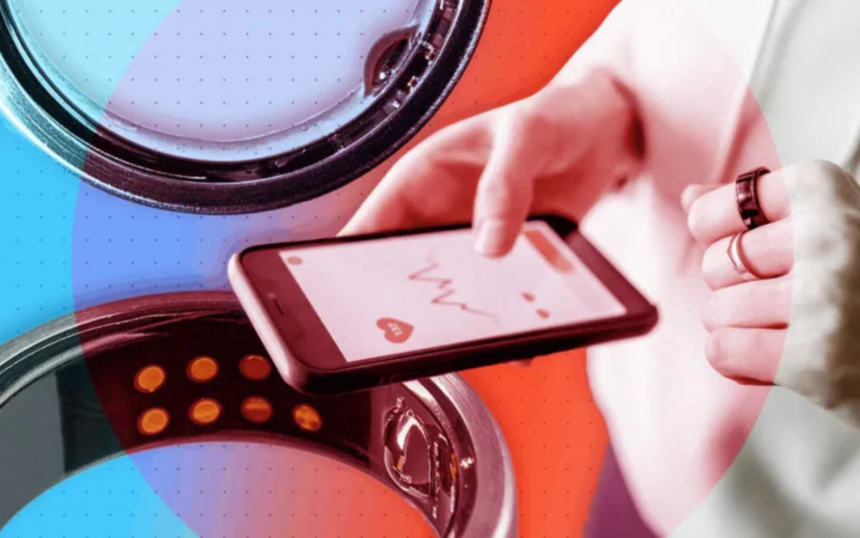
For Ravika, a birthday holiday with her husband took an unexpected turn after her smart ring began reporting unusually poor health readings. Although she felt perfectly well, her wearable device detected a combination of elevated resting heart rate, increased body temperature and reduced heart rate variability—measurements that remained outside her normal range for days.
Curious about the persistent changes, the 34-year-old solicitor from England’s West Midlands searched online and found many women describing similar experiences. Their fitness trackers had recorded unusual biometric patterns that later coincided with confirmed pregnancies.
 Photo Credit:Ravika
How wearables pick up changes in the body
Modern fitness trackers and smart rings continuously monitor a range of physiological signals, including heart rate, skin temperature, sleep quality and heart rate variability (HRV). Because these devices establish a personal baseline over weeks of use, they can detect subtle deviations that might otherwise go unnoticed.
Pregnancy triggers significant hormonal and cardiovascular changes in the body from its earliest stages. Those shifts may appear as higher resting heart rate, increased skin temperature and lower HRV—patterns that some wearable users are now recognizing before taking a pregnancy test.
A clue—not a diagnosis
Medical professionals caution that these biometric changes are far from unique to pregnancy. Illness, stress, alcohol consumption, poor sleep and intense exercise can all produce similar readings.
That means a wearable device cannot diagnose pregnancy. At most, an unusual pattern may encourage someone to take a pregnancy test or seek medical advice if the changes persist. Experts stress that confirmation should always come through established medical methods rather than consumer health devices.
Researchers see growing potential
The experiences shared by women are drawing attention to the broader capabilities of wearable technology. Unlike occasional medical appointments, smart rings and fitness trackers collect continuous health data around the clock, allowing long-term trends to emerge.
Researchers believe this type of ongoing monitoring could eventually support earlier recognition of physiological changes linked to pregnancy and other health conditions. Many wearable platforms have already expanded features related to menstrual cycles, fertility and women’s health as demand for personalized health insights continues to grow.
Privacy remains part of the conversation
As wearable devices collect increasingly detailed health information, privacy advocates continue to raise questions about how reproductive and health-related data are stored, shared and protected.
The growing role of consumer health technology has also prompted discussion about whether regulatory oversight should evolve as these devices become more sophisticated in tracking personal health trends.
What comes next
Stories like Ravika’s highlight how wearable technology is changing the way people notice changes in their health. While fitness trackers are becoming more capable of identifying unusual biometric patterns, healthcare professionals emphasize that they should be viewed as monitoring tools rather than medical diagnostic devices.
As research into wearable health technology advances, scientists will continue examining how continuous biometric data can complement traditional healthcare—while ensuring that accuracy, privacy and clinical validation remain central to its future use.