


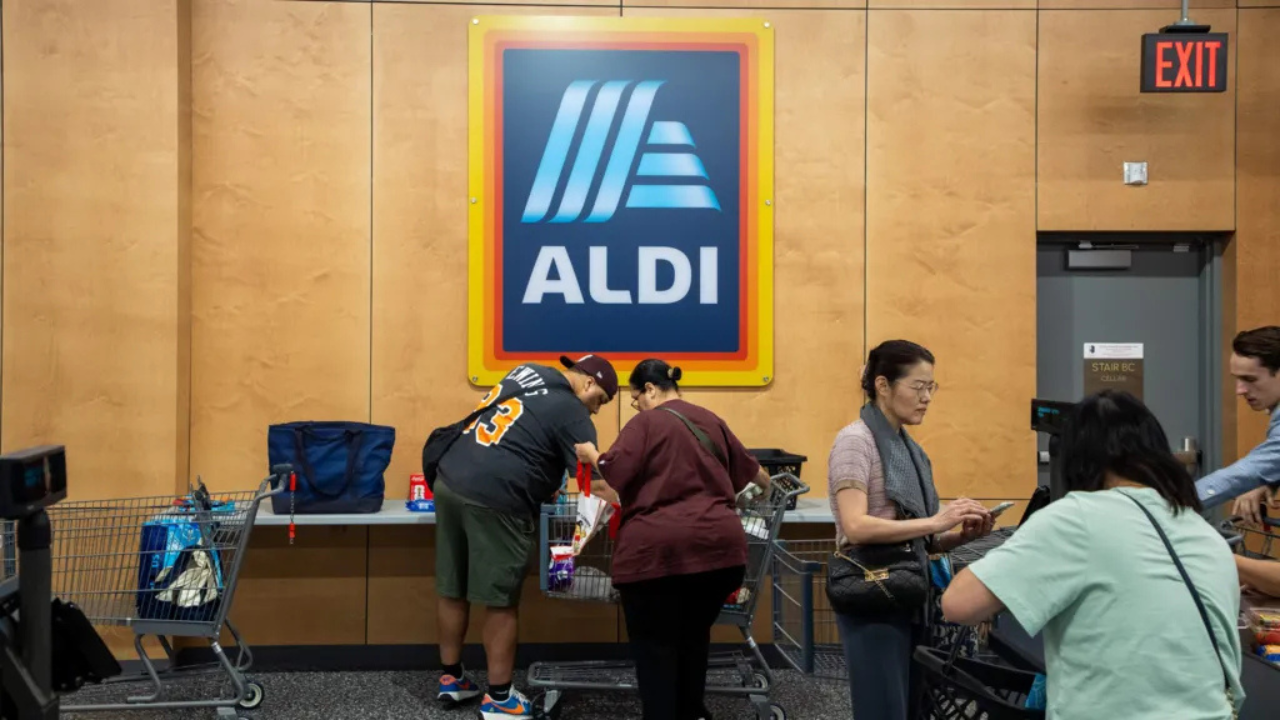
A simple jar of almond butter has become an illustration of Aldi’s broader ambitions in the United States.
In a newly opened Manhattan store, shoppers can buy the pantry staple for about $4, a price that stands in sharp contrast to what some nearby supermarkets charge for similar products. The difference reflects the strategy behind the German discount chain’s latest phase of growth as it looks to attract customers looking for lower grocery bills.

Photo Credit: Francisco Velasquez/BBC
Major Investment Targets Urban America
Aldi is investing roughly $9 billion to open 800 additional US stores over five years, one of the company’s largest expansion efforts in the country since entering the American market in 1976. The plan places greater emphasis on densely populated cities, including Manhattan, marking a shift from the suburban locations that traditionally defined the retailer’s presence.
The expansion is expected to increase Aldi’s nationwide network to more than 4,000 stores over time, strengthening its position among the country’s largest grocery operators. Despite its rapid growth, the company still represents only a small share of overall US grocery spending compared with market leader Walmart.
Winning Shoppers Through Simplicity
Rather than competing on product variety, Aldi has built its business around efficiency.
Its stores typically carry only a fraction of the items available in traditional supermarkets, with a heavy emphasis on private-label brands. A smaller selection allows the retailer to simplify inventory, reduce operating costs and negotiate competitive pricing, savings that are then reflected on store shelves.
Retail analysts say that approach has become increasingly attractive as inflation and higher living costs have encouraged many households—including middle- and higher-income consumers—to search for better grocery value without sacrificing quality.
A Different Challenge Than Walmart
Although Aldi continues to expand quickly, industry observers do not expect it to replace Walmart as the dominant force in American grocery retail.
Walmart benefits from a much broader business model that extends beyond groceries, with significant investments in technology, automation, logistics, advertising and membership programs. Those additional revenue streams provide resources that discount-focused competitors cannot easily match.
Instead, analysts view Aldi’s strategy as targeting a specific segment of the market: shoppers willing to trade a wider product selection for consistently lower prices on everyday essentials. That niche has helped the retailer steadily increase its presence without attempting to mirror the scale of larger supermarket chains.
Urban Growth Comes With New Challenges
Expanding into major cities also creates logistical hurdles.
Retail space in Manhattan commands some of the highest commercial rents in the United States, while delivering inventory requires careful planning because of traffic congestion and limited street access. Company executives have described overnight deliveries using specialized trucks and additional drivers to keep city stores stocked efficiently.
Those operational costs mean maintaining Aldi’s low-price reputation will depend not only on efficient store operations but also on careful management of its urban supply chain.

Photo Credit: Aldi
European Success Provides a Blueprint
Aldi has already demonstrated that its discount model can reshape mature grocery markets.
In the United Kingdom, the retailer grew from a newcomer into one of the country’s largest supermarket chains after years of attracting customers with competitively priced private-label products. Rising living costs further strengthened its appeal, and the company has followed a similar growth trajectory in several European markets.
The US market is larger and more competitive, but Aldi appears to be applying many of the same principles that fueled its overseas success.
As Aldi continues opening new stores, established supermarket operators are likely to face increased pressure to compete on price while maintaining product selection and customer service.
Whether the retailer can dramatically reshape the American grocery landscape remains uncertain, but its aggressive expansion signals growing confidence that value-conscious consumers will continue to seek lower-cost alternatives. With food prices remaining an important concern for many households, Aldi’s combination of simplified operations and affordable pricing is positioning the company as one of the most closely watched players in the evolving US supermarket industry.