

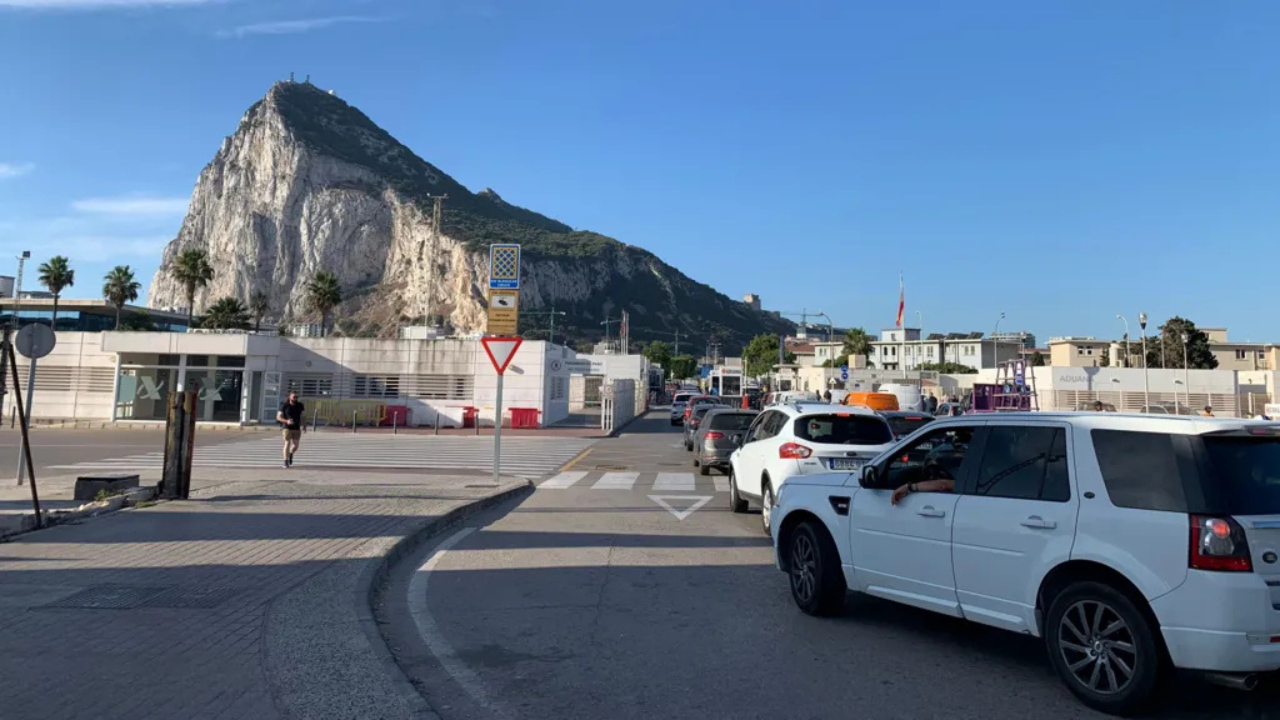
A decades-old frontier that has shaped daily life for generations is about to change dramatically. Beginning 15 July, routine border controls between Gibraltar and Spain are scheduled to be removed under a post-Brexit agreement negotiated by the United Kingdom and the European Union, marking one of the biggest changes to the territory’s relationship with its neighbour in more than a century.
For thousands of people who cross the frontier every day, the change promises a smoother journey. Long vehicle queues and lengthy passport checks have become a familiar part of life for workers travelling between Gibraltar and the nearby Spanish town of La Línea de la Concepción. Officials expect the new system to significantly reduce those delays while allowing people and goods to move more freely.

Photo Credit: BBC
A Post-Brexit Solution for a Unique Border
Gibraltar’s position as a British Overseas Territory sharing its only land border with Spain created a complex challenge after the UK left the European Union. While the UK exited the bloc, Gibraltar’s economy remained closely linked to neighbouring Spain and the wider European market.
Following years of negotiations, London, Madrid and the EU reached an arrangement designed to avoid creating a hard border. Under the agreement, Gibraltar will align with aspects of the European customs framework and the Schengen travel system, allowing unrestricted movement across the land frontier while shifting immigration checks for non-Schengen arrivals to Gibraltar’s airport and port.
The agreement is expected to be provisionally implemented while awaiting the remaining parliamentary approval processes in both the UK and the European Union.
Major Economic Implications
The border change carries significant economic importance for communities on both sides.
Around 15,000 people commute across the frontier during a typical working day, many travelling from Spain into Gibraltar for employment. Easier movement is expected to benefit businesses that rely on cross-border workers, tourism and commercial trade while reducing disruption caused by long waiting times.
The neighbouring municipality of La Línea de la Concepción has long depended on Gibraltar’s economy. Local leaders have argued that removing barriers at the frontier could strengthen business activity and support employment in one of southern Spain’s less prosperous areas.
Businesses in Gibraltar also anticipate increased visitor numbers as travel becomes more convenient, although some companies acknowledge that adapting to new customs procedures and regulatory requirements may increase administrative work.
New Rules for Trade and Taxation
While the removal of physical border controls is expected to simplify travel, businesses will also face changes under the new framework.
Goods sold in Gibraltar will need to comply with European Union regulations, and the territory will introduce a new transaction tax that replaces its previous import duty system. The tax is scheduled to begin at 15% before gradually increasing to 17%, alongside adjustments to excise duties on certain products.
Business owners have broadly welcomed the certainty provided by the agreement after years of negotiations but say the transition will require companies to adapt to new documentation and regulatory standards, particularly for imports arriving from outside the EU.
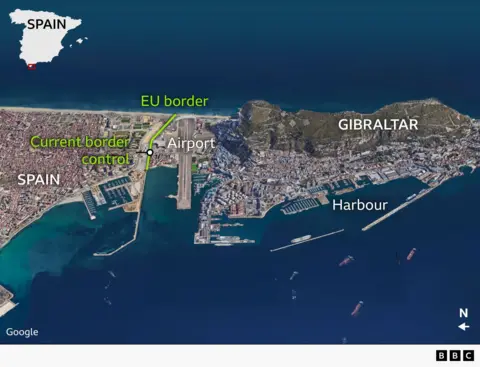
Photo Credit: BBC
A Border Shaped by History
The Gibraltar-Spain frontier has long carried political as well as practical significance.
Britain has administered Gibraltar since it was ceded under the 1713 Treaty of Utrecht, although Spain continues to maintain its claim to sovereignty over the territory. The frontier has periodically become a source of diplomatic tension, including the closure imposed by Spanish leader Francisco Franco in 1969, which remained largely in place until the early 1980s.
The current agreement does not resolve the sovereignty dispute. Instead, it focuses on improving everyday mobility, trade and cooperation while leaving the constitutional status of Gibraltar unchanged.
As preparations continue ahead of the planned 15 July implementation, both Gibraltar and neighbouring Spanish communities are preparing for what many see as a defining moment in their shared future.
If the new arrangements operate as intended, commuters could experience faster crossings, businesses may benefit from stronger commercial links and visitors will gain easier access to the territory. Even as questions surrounding sovereignty remain unresolved, the agreement represents a significant shift in how Gibraltar and Spain manage one of Europe’s most closely watched borders.